If you are shopping for hunting and recreation land near Orr, it is easy to focus on the fun first: deer season, grouse cover, trail riding, or a simple basecamp for weekends up north. But the right parcel is about more than trees and acreage. You need to know how you can legally reach it, what you can do with it, and whether it will work for your long-term plans. This guide will help you sort through the big questions so you can buy with more confidence. Let’s dive in.
Why Orr draws recreation buyers
Orr sits in a part of Northern Minnesota where recreation is tied closely to a huge mix of public land. In St. Louis County alone, just under 900,000 acres of tax-forfeited rural land are managed by the county, and those lands are generally open to hunting, fishing, hiking, camping, and other dispersed recreation.
That matters when you are buying private land nearby. A parcel near Orr may work well as a hunting base, an ATV or snowmobile base, or a seasonal getaway because the surrounding region supports many outdoor uses beyond your property lines.
The Kabetogama State Forest is part of that appeal. Its statutory boundary exceeds 600,000 acres, with about 160,000 acres administered by the Minnesota DNR, and it is classified as managed for motor vehicle use. In that setting, ATVs, ORVs, and OHMs are allowed on roads, routes, and designated trails unless posted closed.
For buyers, the takeaway is simple. Near Orr, you are often not just buying a piece of land. You are buying a base for how you want to spend time in the woods across a broader recreation landscape.
Access matters more than acreage
A beautiful tract can lose value fast if access is unclear. With recreation land, legal access is just as important as the road or trail you can physically see on the ground.
St. Louis County requires driveway permits for new or revised driveways connecting to county roads. If a parcel does not connect directly to a public road, access across tax-forfeited land may require a lease, easement, or other authorization.
There is another layer to watch. If the route to your parcel crosses private land before it reaches state tax-forfeited land, that private access must be secured first. In other words, a trail that seems obvious on a map may not be a legal route for you to use.
Before you buy, make sure you confirm:
- Whether the parcel has direct public road frontage
- Whether an existing driveway is permitted
- Whether any easement is recorded and usable for your intended access
- Whether seasonal roads or trails are private, public, or limited-use
- Whether access changes during wet seasons or winter conditions
Parcel maps are not the final word
Many buyers start with online maps, and that makes sense. St. Louis County’s Land Explorer can help you review parcels, taxes, land records, recreation layers, zoning, and land-use information.
Still, it is only a starting point. The County Surveyor states that Land Explorer shows tax parcel lines, not surveyed property lines, and the county does not conduct private land surveys.
The DNR gives a similar warning for public land mapping. Public land boundary data is general and should be verified on the ground by checking boundary signs and contacting local DNR offices when needed.
That means you should never assume a road, cut line, trail, or corner marker reflects the true legal boundary. Before closing, it is smart to review title, survey information, and real on-site access conditions.
Check zoning jurisdiction early
Not every parcel near Orr follows the same review path. St. Louis County says land-use permits apply in county-administered areas, but some parcels fall under township or city zoning administration.
That can affect your next steps in a big way. The answer to “Can I build a cabin here?” or “Can I keep a camper on this land?” may depend on who has jurisdiction over the parcel.
This is one of the easiest issues to miss when you are buying from out of town. A quick jurisdiction check early in the process can save you from making plans based on the wrong rules.
Look at timber and habitat together
Wooded acreage near Orr can offer both recreation value and long-term land value. But not all tree cover is equal.
The University of Minnesota Extension recommends working with a professional forester before selling timber. A forester can measure trees, estimate value, mark sale boundaries, and prepare an appraisal that addresses volume, value, harvest method, and regeneration.
Even if you are not planning to sell timber right away, that advice still helps as a buyer. It reminds you to look beyond how dense the woods appear and think about the land as a managed resource.
A useful recreation tract is often shaped by several factors working together, such as:
- Stand diversity across the parcel
- Regeneration potential
- Wildlife habitat structure
- Water and terrain features
- Practical access for people and equipment
St. Louis County’s trust-land program is managed to preserve healthy forests, wildlife and fisheries habitat, recreation, forest products, and financial returns. The Minnesota DNR also notes that state forests balance timber, habitat, water quality, and recreation, and that these forest lands can support deer, bear, and ruffed grouse.
For you as a buyer, that means the best land is rarely just “all woods.” The more useful question is how the woods, cover, access, and terrain work together for the kind of use you want.
County land and private land differ
If you are comparing county auction land with privately listed acreage, do not assume the process or costs are the same. County land can look attractive on price, but the details matter.
St. Louis County states that if a tax-forfeited parcel has estimated timber volume, the appraised value of that timber must be paid in full at closing in addition to the purchase price and down payment. That can change the total cost more than buyers expect.
The county also states that tax-forfeited sales are subject to existing easements of record and rights-of-way, and it makes no representations or warranties about access. So if access, timber, or use rights are important to you, those items need close review before you bid or buy.
Planning a cabin or off-grid retreat
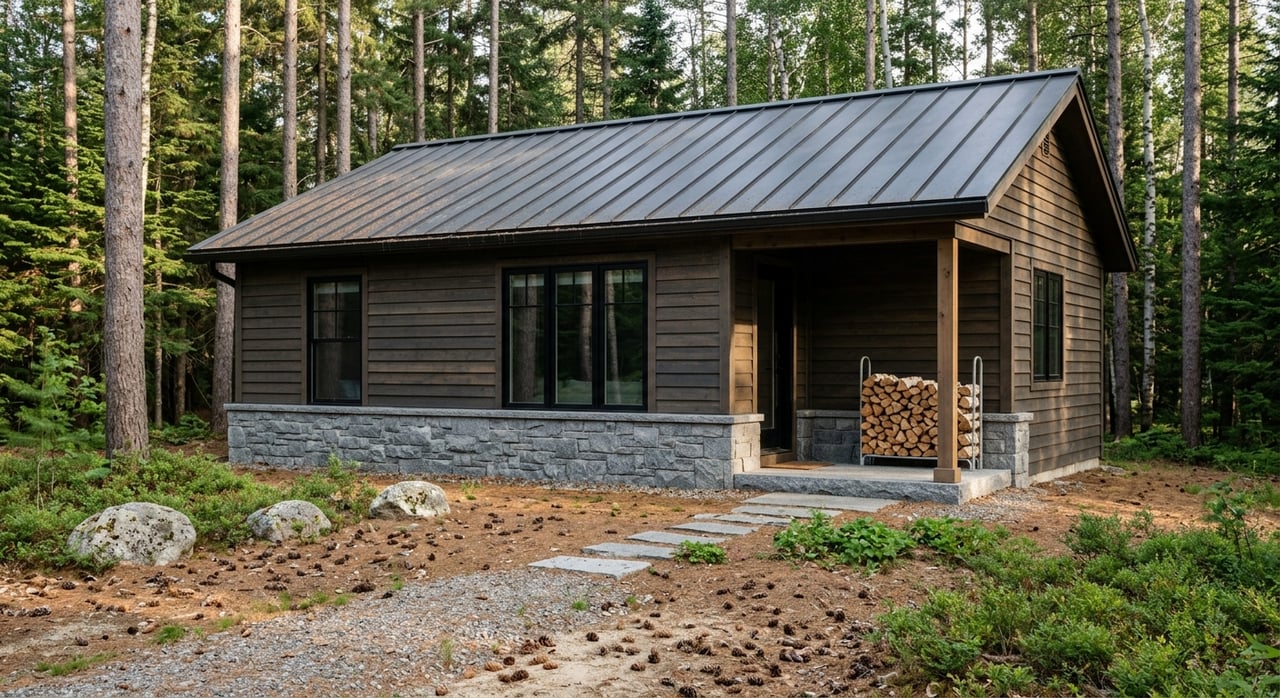
Many buyers near Orr hope to add a small cabin, bunkhouse, or simple off-grid retreat later. That can be possible, but you need to separate land-use approval from building-code approval.
St. Louis County says it does not administer the Minnesota State Building Code, yet it does require land-use permits for activities such as building, moving, or adding to structures, changing a structure’s use, and installing new foundations. So before you assume a parcel is build-ready, make sure the land-use side is checked first.
This is especially important for raw land. A property that looks perfect for a future cabin may still face setbacks, access questions, septic review, or shoreland limits that affect what you can actually build.
Camper and seasonal-use rules to know
A lot of recreation buyers want to start simple with a camper or RV before building anything permanent. Near Orr, that can work on some parcels, but county standards still apply.
Under the St. Louis County zoning ordinance, RVs and other camping may be allowed on some parcels without a permit only if specific standards are met. These include limits such as no more than one RV per parcel per zone district, a current motor vehicle license, required setbacks, and compliance with shoreland alteration and sewage standards.
There is also a special rule for water-access-only property. In those cases, a land-use permit is required.
The big lesson is this: do not assume that because a parcel is rural, it is automatically ready for open-ended seasonal camping. If a camper setup is part of your plan, confirm the county requirements before you close.
Septic can be the biggest hurdle
For many buyers, septic feasibility is one of the most important parts of due diligence. It often decides whether a parcel can support the kind of cabin or seasonal use you want.
St. Louis County requires septic permits for a range of projects. It also requires sanitary-system review for land-use permits within shoreland areas and on parcels under 2.5 acres outside shoreland.
If there is an existing system, transfer rules matter too. The county states that if a system is found noncompliant at transfer, it must be replaced within 12 months for shoreland property and within 24 months for non-shoreland property, or 100 percent of replacement costs must be escrowed.
The county also notes that occupied structures, including accessory dwellings, must meet Minnesota State Well Code setback requirements. For buyers, that means septic and well planning should be part of the conversation very early, not after closing.
A smart due diligence checklist
When you compare hunting and recreation land near Orr, use the same checklist each time. It helps you make better side-by-side decisions and avoid getting distracted by a pretty photo or a low price.
Focus on these core questions:
- Who controls zoning and land-use review for the parcel?
- Does the parcel have legal, practical road access?
- Are boundaries verified by survey or only shown by tax maps?
- Are there easements or rights-of-way affecting use?
- Is septic likely to work for your intended setup?
- If you want a cabin, camper, or off-grid site, what permits apply?
- If timber is part of the value, how has it been evaluated?
- If county land is involved, are there extra timber or access conditions?
The DNR recommends detailed maps, county plat books, and Recreation Compass when researching hunting access. That is especially helpful in northern forested areas where private land, public land, trails, and forest roads can be tightly interwoven.
Why local guidance helps
Buying recreation land near Orr can look simple from a distance. In reality, these properties often come with more moving parts than a typical house purchase.
Access, easements, zoning jurisdiction, timber, septic, and seasonal-use rules can all affect whether a parcel fits your goals. That is why local guidance matters, especially if you are buying from the Twin Cities, another part of Minnesota, or out of state.
When you work with someone who understands Northern Minnesota land, you can ask better questions before you commit. That leads to fewer surprises and a better chance of ending up with land you can truly enjoy.
If you are exploring hunting and recreation land near Orr and want practical, local guidance on how to compare parcels, reach out to Chessica Olson. She can help you look at the details that matter most for Northern Minnesota recreational acreage.
FAQs
What should you verify first when buying recreation land near Orr?
- Start with legal access, zoning jurisdiction, and boundary verification, because those issues shape almost everything else you may want to do with the property.
Does a parcel map confirm property boundaries near Orr?
- No. St. Louis County says its Land Explorer shows tax parcel lines, not surveyed property lines, so you should verify boundaries through title, survey information, and on-the-ground review.
Can you use an RV or camper on hunting land in St. Louis County?
- Sometimes, but only if the parcel meets county standards related to items like setbacks, licensing, sewage compliance, and in some cases land-use permitting.
Is septic important for recreational land near Orr?
- Yes. Septic feasibility can be a major gatekeeper for cabin plans, seasonal use, and land-use approval, especially in shoreland areas and on smaller parcels.
Are county tax-forfeited parcels near Orr the same as private listings?
- No. County sales may involve extra conditions related to access, easements, rights-of-way, and timber value that can affect your total cost and intended use.
Why is Orr attractive for hunting and trail-based recreation buyers?
- The area is connected to a broad network of public land and recreation resources, including county-managed tax-forfeited land and the Kabetogama State Forest, which support hunting, camping, and trail-based use.